
For every entrepreneur, designer, and engineer committed to bringing innovative ideas to market, speed, cost, and flexibility are keys to success. Transforming your CAD model or concept into a physical product you can hold—one that can be tested, presented, and launched—is a critical step for validating your idea, mitigating risk, and securing investment. This guide will provide an in-depth analysis of the two core technologies that make this possible—3D Printing and Vacuum Casting—and clearly outline the key information you need to provide to ensure your project’s success.
Ⅰ、Two Core Technologies: Your On-Demand Manufacturing Arsenal
In physical product development, 3D printing and vacuum casting are a powerful, complementary combination.
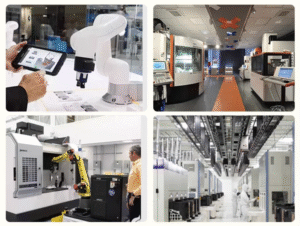
- 3D Printing: Your Rapid Iteration Engine
3D printing (Additive Manufacturing) is the ultimate tool for concept verification and rapid iteration. It requires no molds, building parts layer by layer directly from a digital model, enabling unparalleled design freedom. - Core Applications: Quickly generating concept models, conducting fit-and-assembly checks, and creating functional prototypes to validate mechanical performance.
- Core Value: Significantly compresses design cycles, allowing you to complete multiple design iterations within days and identify and correct design flaws early in the product development process at the lowest possible cost.
- Vacuum Casting: Your Bridge to Low-Volume Production
Once your design is validated via a 3D printed prototype, vacuum casting is the ideal solution for low-volume, high-quality pilot production. This process involves creating a flexible silicone mold using your approved 3D printed master pattern. Then, in a vacuum chamber, two-part polyurethane resin is injected into the mold to produce multiple copies that highly replicate the master’s details. - Core Applications: Low-volume pilot runs (50-500 units), marketing and crowdfunding fulfillment, pre-clinical testing, and sales samples.
- Core Value: Achieve injection-molding-like part quality at a fraction of the tooling cost. PU materials can simulate the mechanical properties and surface finish of various engineering plastics (e.g., ABS, PP, PC), making it an indispensable bridge to mass production.
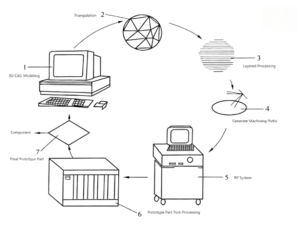
- Typical Workflow: 3D Printed Prototype → Design & Performance Validation → 3D Printed Final Master → Vacuum Casting for Low-Volume Replication.
 Ⅱ、The Blueprint for Success: Key Information You Need to Provide
To ensure your manufacturing partner can accurately and efficiently meet your needs, please provide the following clear and complete information. This not only facilitates a precise quotation but also guarantees the final result meets your expectations.
1.3D Model Files: The Digital Core of Your Project
- Preferred Formats: Please provide neutral format files like STEP or IGES to ensure lossless geometric data transfer.
- Model Quality: Ensure your model is “watertight“—meaning a fully enclosed, manifold solid model without gaps or errors.
- Design Intent: Indicate critical features, minimum wall thickness, and any fine details requiring special attention.
2.Technical Specifications & Performance Requirements
- Intended Use: Clearly state the part’s purpose—is it for “Visual Appearance,” “Functional Testing,” or “End-Use“? This directly determines material and process selection.
- Material Properties: Specify your requirements for the material:
- Mechanical Properties: Impact resistance, tensile strength, hardness (e.g., Shore D).
- Environmental Resistance: Heat deflection temperature, UV resistance, flame retardancy rating.
- Compliance/Certifications: If certifications like USP Class VI, ISO 10993, or Food Contact are required, this must be declared upfront.
3.Appearance & Surface Finish:
- Color: Provide PANTONE codes or physical color samples.
- Surface Texture: Specify the desired finish, e.g., Gloss, Matte, Grit Blasted, or specific grain/texture.
4.Design for Manufacturability Considerations
- Draft Angle: For vacuum cast parts, it is recommended to incorporate a minimum draft angle of 1° in the demolding direction to ensure clean part release and extend the silicone mold’s life.
- Tolerances: Understand and communicate the acceptable tolerance range for critical dimensions. Both 3D printing and vacuum casting have inherent process tolerances; clarifying this upfront prevents misunderstandings later.

Ⅲ、Future Vision: Industry Trends and Your Competitive Advantage
For investors and innovators focused on the future, the following trends are reshaping the product development landscape:
- Hybrid Manufacturing Strategies: Companies are seamlessly integrating 3D printing and vacuum casting to create more flexible and efficient supply chains, enabling a smooth transition from “prototype” to “low-volume product.”
- Material Innovation: Newly emerging materials allow vacuum cast parts to simulate higher-performance thermoplastics and elastomers, making them suitable for use as end-use parts in certain applications.
- Digital & Distributed Manufacturing: Cloud-based manufacturing networks enable you to rapidly source high-quality manufacturing services globally, truly realizing “design anywhere, manufacture locally.”
- Sustainability: The industry is actively promoting the use of recyclable 3D printing materials and technologies for reusing silicone molds to meet growing environmental demands.
Take the Next Step in Your Product Development Journey.
Unlock the full potential of your design with our integrated 3D printing and vacuum casting services.
Schedule a free consultation with our engineering team today to get started.
Leave a Reply