
Mastering Vacuum Casting Design: A Practical Guide to Avoid Defects for High-Quality Low-Volume Production
For product development engineers and industrial designers, vacuum casting (also known as urethane casting) is the ideal process to bridge the gap between prototyping and low-volume manufacturing (typically 50-500 units), perfectly balancing quality, cost, and speed. This process creates polyurethane parts in silicone molds that closely mimic the properties of engineering plastics. However, a non-optimized design can lead directly to demolding issues, surface defects, and even mold failure. This article provides a direct vacuum casting design checklist to help you mitigate risks at the design stage and ensure project success. Partnering with an experienced rapid prototyping service in China can further streamline this process.
Core Design Guidelines and Best Practices
1. Draft Angle: The Key to Successful Demolding
This is the single most important rule in vacuum casting design. While silicone molds are flexible, sufficient draft is essential for clean part release without damaging the mold.
Recommended Value: A minimum draft angle of 1° to 2° is required for any surface perpendicular to the parting line. For deeper textures or taller features, increase this to 2°-3°. Adding draft is the most cost-effective way to extend mold life and improve part yield.
Uniform Wall Thickness: Preventing Sink Marks and Warpage
Similar to injection molding, uneven walls cause different cooling rates, leading to sinks, warpage, or cracks.
Golden Rule: Design walls to be uniform throughout the part. If variation is unavoidable, use gradual transitions (like fillets or tapers). The typical recommended range is 1.5mm to 4mm.
2. Parting Line and Mold Design: Plan Ahead
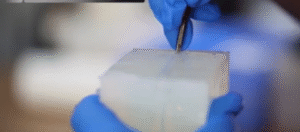
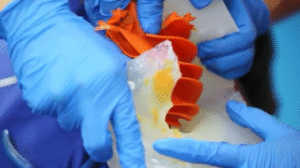
The parting line defines where the two halves of the silicone mold meet and significantly impacts the part’s visual quality.
Design Advice: Consult early with your rapid prototyping services provider to optimize the parting line location. Place it at edges or on non-critical aesthetic surfaces. Avoid designing key cosmetic or high-gloss areas on the parting line to minimize faint flash lines.
3. Gating and Venting: Ensuring Complete Filling
The gate is where liquid resin enters the mold, and vents allow air to escape. While designed by experienced technicians, your part geometry affects their placement.
Key Consideration: Designate non-critical or hidden flat areas for gate locations. Ensure your design has no trapped air pockets (areas where resin flows in but air cannot escape), as these cause incomplete filling.
4.Material Selection Considerations
A wide range of polyurethane resins is available for vacuum casting, simulating ABS, PP, PC, or even soft-touch rubber. Define your needs clearly:
Mechanical Requirements: High impact resistance, heat deflection temperature, or flexibility?
Aesthetics and Post-Processing: Is transparency, high gloss, painting, or metallization required?
Certification Testing: Does the part need UL94 flame retardancy or other certifications?
Discussing material needs early with your low-volume manufacturing partner is crucial. They can recommend the most suitable resin and provide its specific shrinkage rate for accurate dimensional compensation in your CAD model. This is especially critical for applications like vacuum casting for medical devices, where material biocompatibility and precision are paramount.
Conclusion
Following these guidelines will significantly increase the success rate and quality of your vacuum casting projects. A proficient partner in low-volume manufacturing in China acts not just as a producer, but as a consultant during your design phase. Before finalizing your design for molding, consider using 3D printing to create a prototype for physical fit and feel verification—this remains the most cost-effective validation step.
Meta Description for SEO: Master vacuum casting design with our expert guide. Learn key rules for draft angles, wall thickness, and material selection to prevent defects in your low-volume production or rapid prototyping project. Essential reading for engineers.
Suggested Keywords/Tags: vacuum casting design guide, urethane casting, low volume manufacturing, rapid prototyping service, silicone molding, draft angle, polyurethane parts, China prototyping, vacuum casting for medical devices, small batch production.
Leave a Reply