
For decision-makers in the medical device industry, the journey from an innovative concept to a compliant, market-ready product is often a long and capital-intensive trek. This article explores how rapid manufacturing technologies, centered on 3D printing and vacuum casting services, are becoming strategic tools to accelerate this process, mitigate upfront risk, and unlock the personalized medical market.
In the highly regulated medical sector, development cycles are protracted, tooling investments are massive, and clinical validation requirements are stringent. The core challenge for executives is clear: how to bring more effective products to market faster while controlling risk and cost. The answer lies in embracing a rapid prototyping and low-volume manufacturing strategy built on additive manufacturing.
From Mass Production to Precision: A Paradigm Shift in Prototyping and Pilot Runs
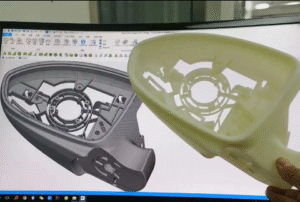
Traditional development relies on expensive steel molds for injection molding trials, where any design modification leads to significant cost and timeline overruns. Today, utilizing SLA or DLP 3D printing technologies, R&D teams can obtain functional prototypes made from clinical-grade, biocompatible materials within days. These prototypes are suitable for design verification, surgeon consultation, and even early in-vivo evaluation. This approach compresses iteration cycles from months to weeks. More crucially, it enables comprehensive, low-cost testing before design freeze, fundamentally reducing development risk at its source.
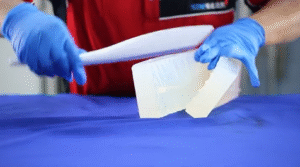
When a design advances to the stage requiring 50-200 units for clinical validation or regulatory submission, vacuum casting (urethane casting) demonstrates irreplaceable value. This process can produce high-fidelity, pilot-run parts with properties close to final injection-molded devices at a low per-unit cost and with a lead time of 7-10 days, using silicone molds. It offers a wide range of material options, from PP-like to TPU-like resins. This allows companies to produce small batches of devices for rigorous clinical testing without committing to hundreds of thousands of dollars in hard tooling investment, dramatically optimizing cash flow—a key advantage when considering low volume manufacturing in China for global markets.
Unlocking the Future: On-Demand Production and Patient-Specific Implants
The more forward-looking strategic value is that these technologies are paving the way directly to final products. For instance, 3D printed custom surgical guides and implants based on patient CT data have become established applications in orthopedics and dentistry. This marks a supply chain revolution: shifting from “one product for all” to “a specific product for each individual.” For decision-makers, this represents not merely a technical upgrade, but a strategic opportunity to access new markets and build higher service barriers. Establishing expertise in this area positions a company as a leader in the medical device innovation landscape.
Actionable Insight for Executives:
Audit your current product development pipeline to identify the most time-intensive stages from concept to clinical trials. Partnering with a comprehensive rapid prototyping service provider is a strategic move. Such a partnership can not only compress your timeline but also enable a “fail fast, learn fast” agile approach. This ensures that capital is allocated more efficiently toward the most promising innovative pathways, de-risking the entire development process for personalized medical devices.
Leave a Reply