
Core Summary: Electrification and intelligence are reshaping the automotive landscape, where the speed of innovation determines success. This article analyzes how rapid prototyping and low volume manufacturing capabilities have become core infrastructure for OEMs and Tier 1 suppliers to cope with rapid technological iteration and conduct low-cost market testing, directly impacting a company’s innovation ROI.
Competition in the auto industry has shifted from scale manufacturing to a race for innovation speed. A vehicle’s electronic architecture, smart cockpit, or exterior design can become outdated within 18 months. For corporate decision-makers responsible for strategy, the core question becomes: how to build an R&D system that enables bold innovation while strictly controlling the cost of trial and error?

Building the “Proof-of-Concept” Highway
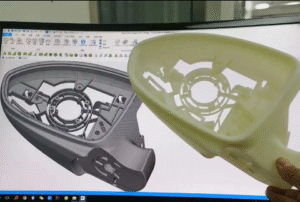
In developing components like smart hardware, sensor housings, and interior trim, traditional CNC machining or tooling cannot keep pace with the speed of ideation. Industrial-grade 3D printing can produce physical parts on the same day as design, for assembly checks, aerodynamic testing, or user experience evaluation. This “what-you-see-is-what-you-get” capability makes cross-department collaboration and design decision-making exceptionally efficient, ensuring ideas are flawlessly transformed into testable prototypes—a critical advantage when sourcing rapid prototyping services in China for global development cycles.
Lowering the Cost of Entry for “Market Validation”
When innovations need to leave the lab for real-user testing or limited presales, vacuum casting provides the perfect solution. It offers a path for low volume manufacturing of concept car components, limited-edition accessories, or aftermarket upgrade parts, delivering injection-molding quality at near-zero tooling cost. Companies can produce hundreds of high-quality units for thousands, not hundreds of thousands, of dollars, gathering crucial market feedback before committing to massive tooling investments. This process of validating product-market fit is invaluable, especially for vacuum casting for automotive parts like complex ductwork or customized interior elements.

Building Future-Proof Supply Chain Resilience
Furthermore, this on-demand manufacturing model is itself a risk management tool. It reduces dependence on large-scale pre-production inventory, allowing companies to respond more flexibly to market changes. Against a backdrop of increased supply chain uncertainty, maintaining local or regional rapid prototyping and low volume manufacturing capacity has become a strategic buffer for safeguarding critical project timelines.
Actionable Insight:
Incorporate agile manufacturing capabilities into your enterprise innovation platform planning. Partnering with a service provider that offers full-chain capabilities in CNC machining, 3D printing, and vacuum casting provides your team with a seamless, rapid transition platform from “idea” to “low-volume product,” tangibly accelerating your innovation cycle. For companies looking to leverage a competitive low volume manufacturing China advantage, this integrated approach is no longer just an option but a strategic imperative for speed and agility.
Leave a Reply