
Core Insight: In an era of increasingly difficult demand forecasting and heightened global supply chain volatility, the traditional “forecast-to-stock” model has become a significant financial liability. This article provides decision-makers with an analysis of how to transform low volume manufacturing strategy from a supporting service into a core strategy for optimizing cash flow and accelerating market responsiveness.
Inventory, once a buffer to ensure sales, has now become one of the greatest risks eroding profits and tying up cash in many industries. Excess inventory directly translates to warehousing costs, depreciation, and obsolescence losses, while stockouts result in lost sales opportunities and customer attrition. Business leaders must seek a more flexible, demand-responsive supply model.
The Supply Chain Transformation: From “Push” to “Pull”
Traditional mass production is based on long-term forecasting, constituting a push-based supply chain. In contrast, the core of low-volume, on-demand production is pull-based—initiating manufacturing only when actual demand arises (e.g., customer orders, channel replenishment). Digital manufacturing technologies, represented by vacuum casting and rapid CNC machining, make this model economically viable. They require no tooling investment, offer controllable per-part costs, and can deliver high-quality products—from dozens to hundreds of units—within 1 to 4 weeks.
Strategic Value: Risk Mitigation and Opportunity Capture
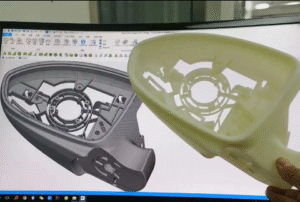

Reducing New Product Launch Risk: When introducing a new or iterative product, using low-volume pilot production to test real market reaction allows data-driven decisions on whether to scale up. This avoids catastrophic inventory buildup due to forecasting errors.
Sustaining Long-Tail Demand: Maintaining a full mold production line for discontinued or low-frequency demand products is highly uneconomical. On-demand manufacturing perfectly meets the long-term, sporadic need for service parts and replacements, freeing up capital locked in aging inventory.
Capitalizing on Unexpected Market Opportunities: When unexpected market demand or trends emerge, an on-demand manufacturing system enables rapid response, allowing companies to bring products to market ahead of competitors, transforming supply chain agility into a competitive advantage. This is crucial for sectors like consumer electronics and vacuum casting for medical devices, where speed and compliance are paramount.

Implementation Path: Building Agility with Technology Partners
The key to successfully implementing this strategy lies in deep collaboration with manufacturing partners. You need not just a processing factory, but a strategic supplier with comprehensive capabilities in rapid prototyping services, rapid tooling, and low volume manufacturing, who also understands your business logic. They should seamlessly integrate with your demand, transforming your digital design files into shelf-ready products quickly and reliably.
Actionable Advice:
Immediately review your product portfolio to identify categories with unstable demand, fast iteration cycles, or high inventory costs. Initiate a pilot project with a professional on-demand manufacturing partner. Experience firsthand how this approach can lower your inventory levels, improve cash conversion cycles, and deliver unprecedented market agility. For global brands, partnering with an expert in low volume manufacturing China can offer a compelling blend of strategic agility, advanced technical capability, and cost efficiency.
Leave a Reply