
In real-world product development, especially for complex smart hardware, a single manufacturing process often falls short. The key to success lies in crafting a hybrid manufacturing roadmap, allowing each technology to deliver maximum value at its most proficient stage. Let’s analyze this strategy through a fictional yet typical case: the development of a “Smart Outdoor Camera.”
Project Goal: Develop an integrated outdoor security camera with solar panels, multiple sensors, and complex antennas. Required to complete design verification and produce 50 units for field testing within 6 months.
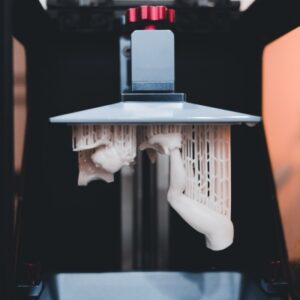
Phase 1: Internal Structure & Layout Verification
Challenge: Extremely compact internal space requiring validation for the assembly feasibility of the mainboard, battery, sensor modules, and thermal management structure.
Solution & Rationale: Utilize low-cost FDM 3D Printing.
The goal at this stage is rapid iteration. FDM technology allows for the quick and very inexpensive printing (using primarily PLA material) of the device’s internal skeleton and mounting structures. The team printed 8 iterative versions within two weeks, resolving all interferences and finalizing the optimal layout. Aesthetics and strength were secondary concerns here, making FDM the ideal rapid prototyping tool for conceptual validation.
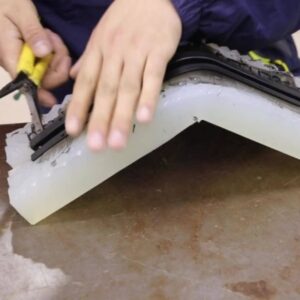
Phase 2: Functional Prototype & Durability Testing
Challenge: Need fully assembled, robust prototypes for IP67 waterproof testing, drop tests, and long-term operation validation in outdoor environments.
Solution & Rationale: Employ a combination of CNC Machining (for the core load-bearing frame) and high-precision SLA 3D Printing (for the main housing with professional post-processing).
The CNC aluminum alloy frame ensured overall structural rigidity, providing metal-grade strength for screw posts and hinges, allowing the unit to pass drop tests.
The SLA-printed housing perfectly captured complex curves and surface textures. After sanding, painting, and UV curing, it achieved a look and feel nearly indistinguishable from the intended injection-molded part, succeeding in both waterproof validation and marketing photography. This phase is critical for functional prototyping.
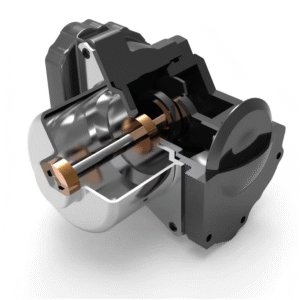
Phase 3: Pilot Production for Field Testing
Challenge: Produce 50 fully functional pilot units for extended field testing with real users. Units must closely mimic the final product in function, appearance, and material feel.
Solution & Rationale: Implement Vacuum Casting (Urethane Casting).
Using a validated SLA master model from Phase 2, vacuum casting was used for small-batch replication with ABS-like polyurethane resin. This approach delivered:
Material Fidelity: Cast parts offered strength, weather resistance, and手感 very close to actual molded ABS.
Cost & Speed Efficiency: It provided 50 high-quality units at a low per-part cost and with a lead time of approximately 2 weeks, all before committing to expensive production tooling—a cornerstone of effective low-volume manufacturing.
Detail Reproduction: Easily incorporated color and perfectly replicated surface textures and logo details.
Summary & Value Realized:
Through this combined strategy of “FDM for Rapid Iteration → CNC + SLA for High-Fidelity Validation → Vacuum Casting for Pilot Run,” the team achieved:
Risk Mitigation: Identified and resolved design, structural, and material issues using appropriate processes before final tooling.
Cost Control: Avoided high costs for mold modifications due to late-stage design changes.
Time Compression: Accelerated the timeline by validating different components in parallel and putting high-fidelity test units into users’ hands earlier, gathering crucial data for final product sign-off.
This case clearly demonstrates that in modern product development, the most intelligent approach is not to seek a “one-size-fits-all” process, but to act as a skilled conductor of a “technology orchestra,” precisely deploying each instrument (manufacturing工艺) according to the movement (development phase) to ensure a successful market launch. This integrated rapid prototyping and low-volume manufacturing solution is key to getting your product to market faster and with greater confidence.
Leave a Reply