
In the early stages of product development, creating a physical proof of concept (PoC) prototype is a critical step. It allows designers, engineers, and stakeholders to tangibly evaluate a product’s form, ergonomics, and basic functionality. A common dilemma arises: should you prioritize sheer speed, or does the prototype need to closely mimic the final product in terms of material, strength, and precision? Understanding where rapid prototyping services like 3D printing and CNC machining fall on the spectrum of “verification speed” versus “testing fidelity” is key to making the optimal choice.
The Need for Speed: The Core Advantage of 3D Printing
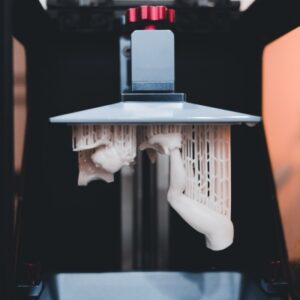
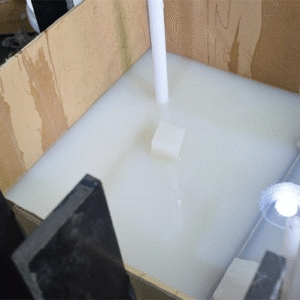
When your primary need is to “see it fast” and “change it fast,” 3D printing, particularly SLA (Stereolithography) or DLP technologies, is the undisputed champion. This process can translate your CAD model into a physical part with minimal setup, requiring no programming or custom tooling. The turnaround from file upload to holding the first prototype can often be achieved within 24 to 72 hours.
This is invaluable for assessing aesthetics, fit-checking dimensions, conducting user experience tests, or holding internal reviews. Designers can iterate through multiple design variations in a single week at a low cost. For instance, a team developing a new smart home control panel could use SLA 3D printing to produce five models with different button layouts and surface textures in three days for focus group testing, enabling rapid feedback and direction setting—a cornerstone of agile low volume manufacturing strategies.
Functional Fidelity: The Unmatched Value of CNC Machining
However, if your proof of concept must simulate the real-world behavior of the final product—such as bearing structural loads, undergoing wear, or operating in specific thermal environments—CNC machining is the more reliable choice. Its greatest strength is the use of real engineering materials.
Material Fidelity: You can fabricate prototypes from the exact materials intended for production, such as aluminum alloys, stainless steel, industrial-grade nylons, or engineered plastics. This ensures the prototype matches the final part in mechanical properties (strength, toughness), thermal performance, and chemical resistance.
Precision & Surface Finish: CNC machining offers exceptional dimensional accuracy and superior surface quality. This is critical for testing components that require precise assembly, like transmission parts, or housings with stringent aesthetic requirements—an essential consideration for fields like vacuum casting for medical devices where precision is paramount.
For example, a prototype bracket for an automotive engine bay sensor must withstand high temperatures and vibration. A CNC-machined aluminum prototype can be mounted on a real engine for durability testing, providing far more reliable data than a 3D-printed plastic part.
The Decision Matrix: Choosing Your Path
The following matrix outlines key decision factors to guide your selection for a successful proof of concept:
| Consideration | Scenario Favoring 3D Printing | Scenario Favoring CNC Machining |
| Primary Goal | Visual assessment, form & fit, UX testing, internal review. | Functional testing, structural validation, environmental testing, precision assembly checks. |
| Timeline | Very fast (1-3 days); need for multiple rapid iterations. | Allows for longer lead time (3-7 days) to obtain a high-fidelity test piece. |
| Material Need | Standard prototyping resins or plastics are sufficient. | Requires specific metals or high-performance engineering plastics. |
| Geometry | Excellent for highly complex, organic shapes, internal channels. | High capability, but may have limitations with deep cavities or certain undercuts. |
| Unit Cost | Generally lower, especially for complex geometries. | Generally higher, but can be competitive for simpler metal parts. |
Conclusion & The Integrated Solution
No single process is optimal for every scenario. The smart approach is to strategically mix and match based on the specific goal of each validation phase. A common and effective strategy is to use 3D printing for early-stage concept screening and form confirmation, followed by CNC machining to produce 1-2 high-fidelity prototypes for critical functional testing.
For international clients seeking a streamlined supply chain, partnering with a full-service low volume manufacturing China provider that offers both advanced 3D printing and precision CNC machining under one roof is the most efficient path. This integrated approach ensures seamless transition between prototyping stages, reduces logistical overhead, and accelerates your product’s journey from concept to reality, while always ensuring the right balance between speed and fidelity is achieved.
Leave a Reply